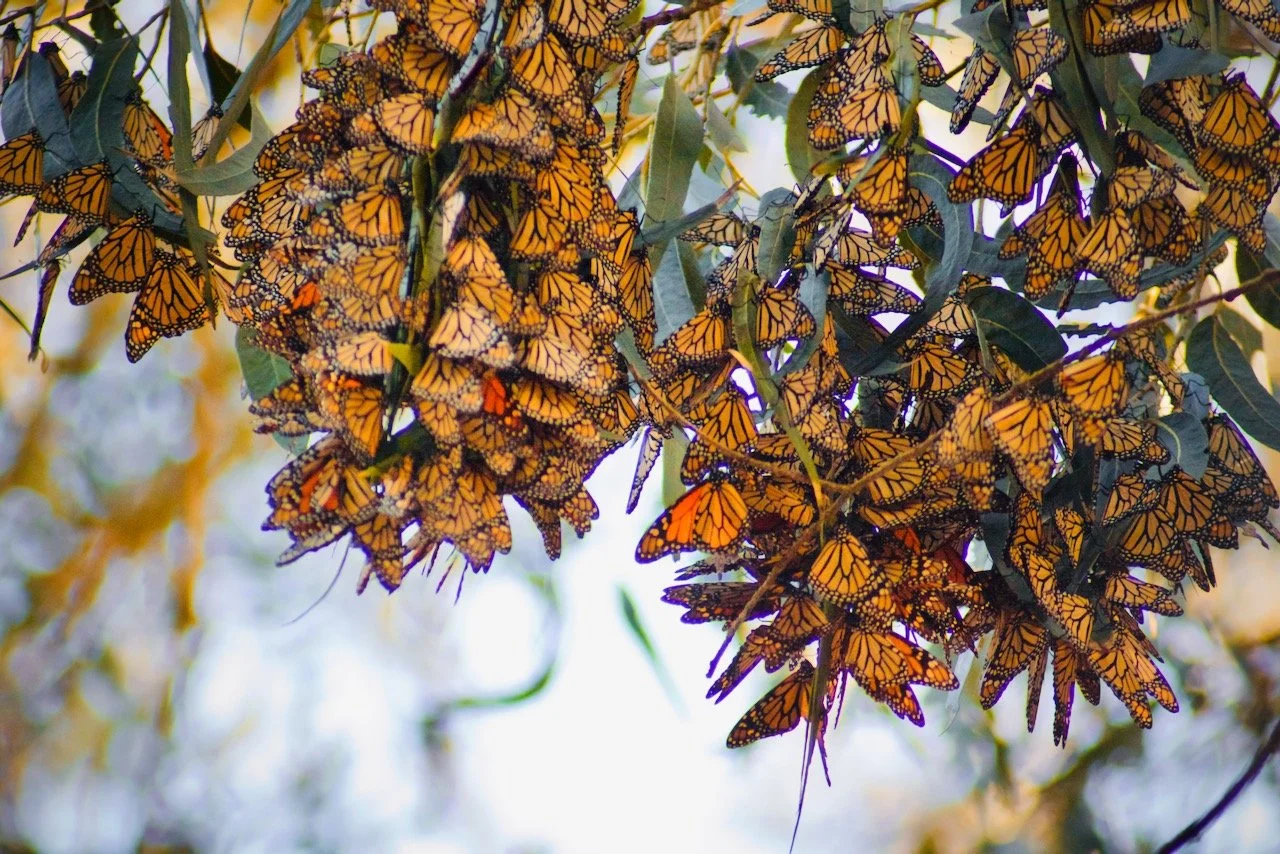
Help Create a Preserve for the Monarchs of El Granada
It is exciting news! We have a Xerces Society Verified Historical Overwintering Site in El Granada! Monarch’s are endangered, so EVERY REMAINING OVERWINTERING SITE is CRITICAL to their survival.
The location of the monarch overwintering site is owned by the Cabrillo Unified School District. The San Mateo County Housing Element Rezoning Program is in the process of rezoning the land for multifamily housing. The School District has stated they DO NOT plan to develop or sell the land at this time. However, the land is not safe from development in the long term as decisions could change.
Here is what you can do now to help protect this precious endangered species habitat:
1. Write a short message to the Cabrillo Unified School District Board, the SMC Planning Department, and SMC Board of Supervisors.
Ask the Planning Department NOT TO rezone the parcels multifamily housing.
Ask the School District to convert the land into an educational nature preserve/Monarch Sanctuary.
Ask the SMC Board of Supervisors to vote against rezoning it to multifamily housing.
Send photos if you like. Feel free to include any information we provide here about Monarchs or scientific info from the Xerces site. Please send your message to:
to: LafontaineB@cabrillo.k12.ca.us, miramontesr@cabrillo.k12.ca.us, SMC_SupMueller@smcgov.org, ncorzo@smcgov.org, SMCSupSpeier@smcgov.org, SMC_SupGauthier@smcgov.org, dcanepa@smcgov.org, wgibson@smcgov.org, planning_commission@smcgov.org
cc: monarchsite3111@gmail.com, tbayudan@smcgov.org
Subject: DO NOT Rezone Housing Element Parcels, El Granada to multifamily housing. DO create an Educational Monarch Sanctuary/Preserve for the coastside community
EXAMPLE MESSAGE (do not copy-make it your own):
Greeting: Dear San Mateo Planning Department, Cabrillo Unified School District Board, Superintendent Miramontes, and the San Mateo County Board of Supervisors:
I live in El Granada and I am respectfully asking:
1. San Mateo County Planning Department
Please DO NOT rezone this land to multifamily housing.
2. Cabrillo Unified School District
Please protect this land by creating a Monarch Sanctuary/Nature Preserve and an exemplary educational site for our schools and the community.
3. San Mateo County Board of Supervisors
Please protect the Northern El Granada seasonal wetland parcels by voting against rezoning them to multifamily housing.
This land is not just empty parcels. It is a historical verified documented Monarch butterfly overwintering site by the Xerces Society for decades. It is also a seasonal wetland. Both are endangered habitats which are fragile and irreplaceable. Western Monarch populations have collapsed in recent decades and are considered endangered due to habitat loss. It is critical to protect every remaining overwintering site.
Each year, from October to Februrary, our family has watched Monarchs in this area — delicate, miraculous, and increasingly rare. For many of us, those moments are a reminder of how special this place is.
This land supports a seasonal wetland rich in wildlife — [frogs, raptors, owls, many bird species, deer, pollinators, bats — include what you’ve personally observed and heard]. It is living, breathing habitat. If it is ever paved or built upon, it will be gone forever and those species will be ever more threatened.
Protecting this land would preserve endangered species habitat, safeguard a seasonal wetland, and create an extraordinary educational opportunity for Coastside students, schools and the community.
Respectfully,
[Your Name]
[Your title (if applicable)]
HOW ELSE YOU CAN HELP
Share this with neighbors, friends, and on social media
Email monarchsite3111@gmail.com to be added to updates.
Help connect us with media, photographers, land trusts, bird or pollinator groups.
Avoid pesticide, insecticide, and herbicide use — these chemicals contribute to Monarch decline. Find effective alternatives here.
Learn best time to trim and remove trees to avoid wildlife take. This action will protect all wildlife and pollinators on the coast.
Thank you so much for your support and assistance in the protection of this land! Please forward this message to anyone you know would like to support this effort and have them contact monarchsite3111@gmail.com Thank you!
More info: What, Where and Why?
Latest Xerces Western Monarch Count Update
Latest news: Inappropriate Tree removal affects Monarch Habitat in Ventura
County Title of the site: San Mateo County Housing Element Rezoning Program
County Project Page Link : Here, you can find out more about the project, updates, timeline, meeting agendas for the planning commission, and you can sign up for email updates at the bottom of the page.
Where: see this link from the County website
What is an overwintering site? (link)
Why is it important? (link)
1. Habitat loss and pesticides are the reason for the detrimental decline in the Monarch population. Every remaining overwintering site is critical to Monarch’s survival as they are endangered.
San Mateo and surrounding Counties are warming up with climate change and becoming a more prime location for Monarch Overwintering habitat, so they will likely be looking to overwinter on our coast more in the future. As a community we can actively look for sites to protect and report to Xerces.
Here you can find a map of the Xerces verified overwintering sites in the West.
Vernal Pools: (there are about 12 vernal pools noted on the site some are dried up, one big one by the tree mentioned…. still full)
Definition: Temporary, seasonal wetlands, sometimes called ephemeral pools.
Function: They act as critical breeding habitats for amphibians (like salamanders) and invertebrates, as they are generally free from fish predators.
to help protect it contact: monarchsite3111@gmail.com
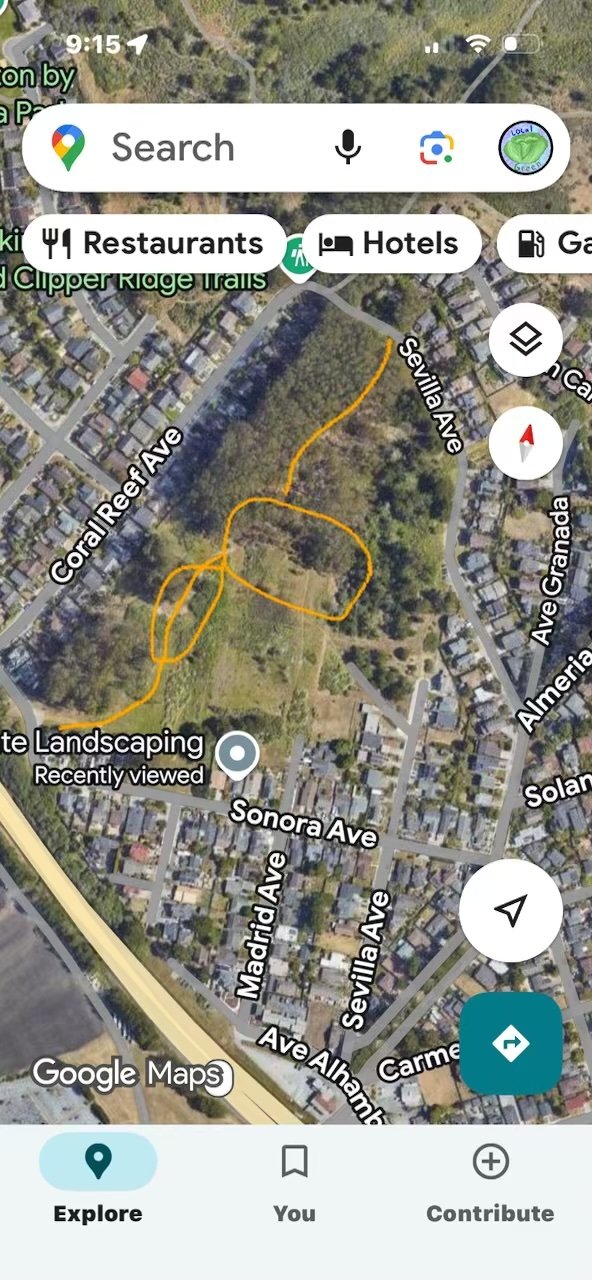
Vegetated green below : is the site
orange areas: locations where monarchs are seen flying. They cluster in the surrounding trees and fly through all areas of the trees, willow, and coyote bush.
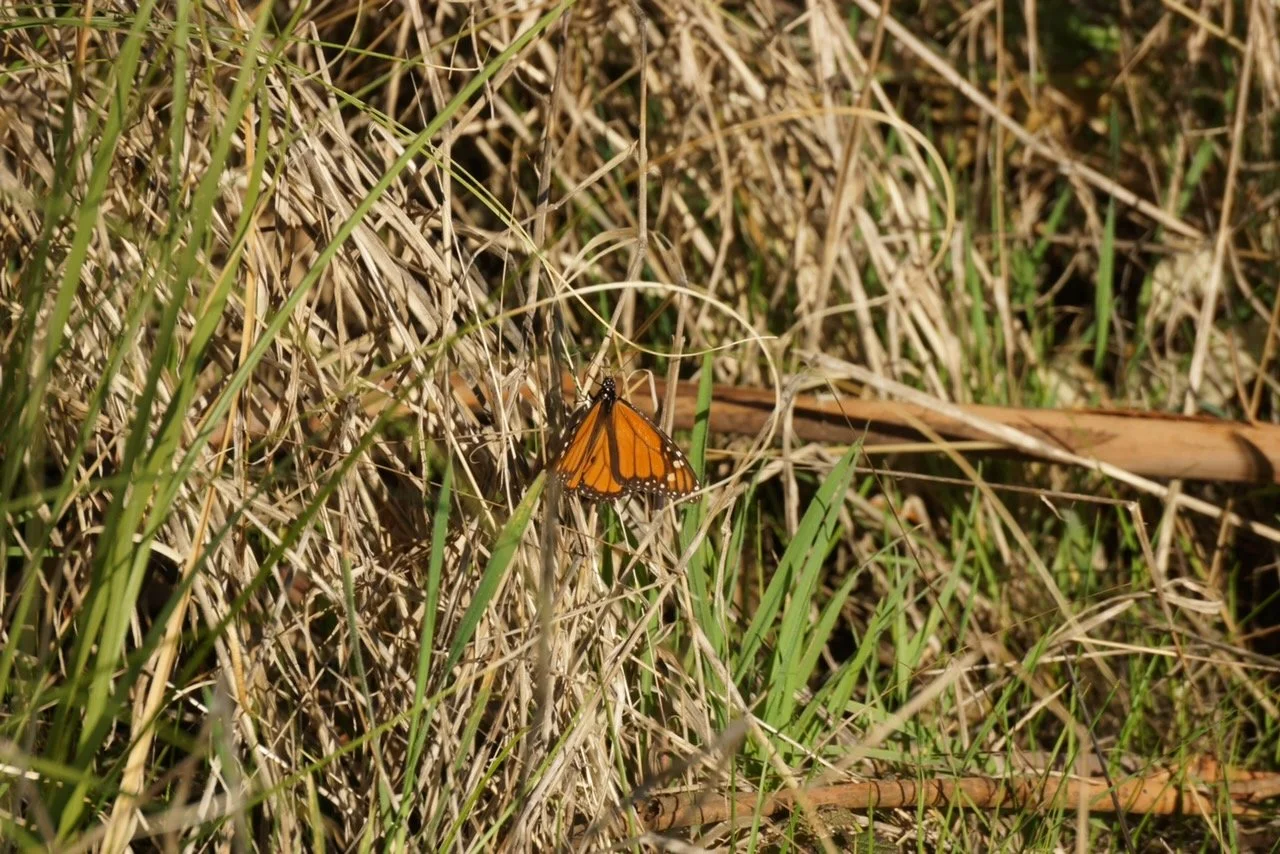
This area is special!
It is a seasonal wetland with an abundance of wildlife coming down from a corridor in the GGNRA, migrating birds, and pollinators.
Giant fuzzy Bumble Bees roam the meadow. You can hear the endangered Red Legged Frogs at dusk and the endangered California Garter Snake have been spotted. Bats live in the trees along with great horned owls who have been spotted with their owlets every spring. Hummingbirds, song birds, woodpeckers, sparrows, and many others migrate and live here. Peregrine Falcons stop by often to rest in the trees. Deer, bobcats, foxes, and coyotes are often seen in the area.
You can hear a jungle of bird calls as you walk through on some days.
There are many water loving native plants and native scrub plants out there. Some potentially 300 year old plus coyote bushes still live there and about 12 vernal pools were spotted recently. Some pools are dried up and one big one is still full.
Monarch Migration Facts (Xerces):
Please see link here for maps. Yes, they do migrate to our coastline for overwintering. After that, they lay their eggs inland on any milkweed they can find. Xerces claims they are likely to migrate here more as the climate warms up. That means look for them from October to February and report and potential overwintering sites to monarchsite3111@gmail.com.